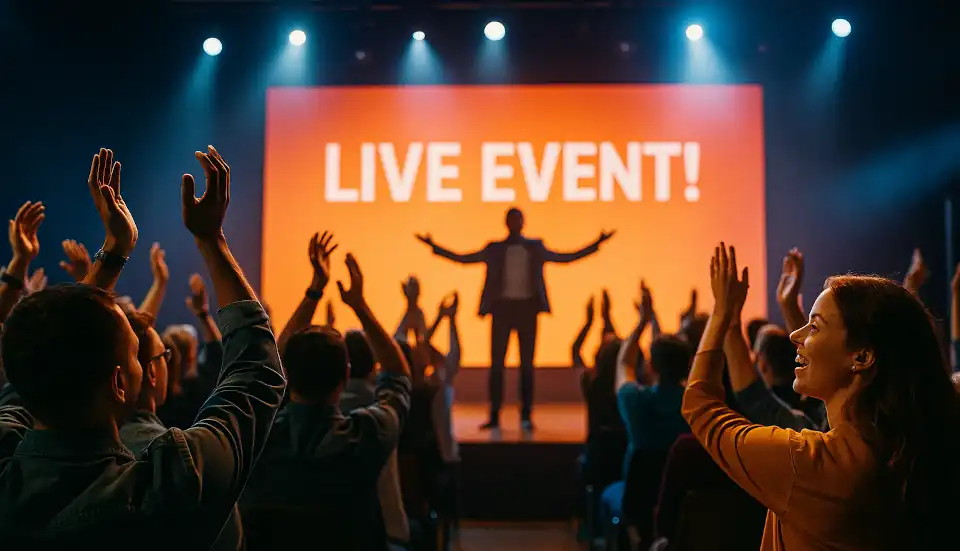
大多数现场活动失败的原因在于营销失误

现场活动营销策略

大多数现场活动的失败都是因为营销失误。你投入了大量时间和金钱进行策划,但座位却一直空着,或者热闹的气氛平淡无奇。制定一个能吸引观众、激发激情的现场活动营销战略并不是凭空猜测,而是要采用明智、有针对性的行动,从而取得成效。请继续阅读,了解如何制定一个能让现场座无虚席并在活动结束后仍能让人们津津乐道的计划。

常见问题

Live events only succeed when the right audience hears about them early enough, understands why they should care, and feels confident about taking action. Great programming, speakers or performers are not enough on their own. If the event website is unclear, the ticket message is weak, or the booking journey becomes stressful, even a promising event can underperform.

That is why live event marketing has to cover more than promotion. It needs to connect audience targeting, channel choice, messaging, timing and the booking experience itself. Enterprise-level organisers also need to think about what happens if marketing works extremely well, because a surge of attention can create just as many problems as a lack of demand if the website or ticketing flow is not prepared.

Queue-Fair helps live event teams protect the commercial side of success. If a campaign, artist announcement or on-sale drives a rush of visitors, Queue-Fair can place people in a fair, branded virtual waiting room instead of letting the site crash. It can usually be added in about five minutes with a single line of code, and organisations can start with Free Queue before scaling up to a broader enterprise rollout.

If marketing suddenly works better than expected, the first priority is to stop uncontrolled demand from overwhelming the ticketing or registration journey. Many teams assume that a sell-out atmosphere is always good news, but if too many people hit the same pages at once, the result can be slow checkouts, failed bookings, confused customers and damage to trust.

That is why event marketing and traffic management should be planned together. A successful campaign needs a safe path from awareness to conversion. Enterprise event teams in particular need to protect high-pressure onsales, pre-registration windows and public launches so that attention turns into completed transactions rather than error messages and support tickets.

Queue-Fair gives organisers a practical way to handle that success. It holds excess visitors outside the bottleneck, admits them at the safe rate, and preserves a fair first-come, first-served experience. Because it can usually be deployed in about five minutes with one line of code, and can be tried through Free Queue, it is a fast way to turn marketing momentum into stable revenue.

Yes. A queue page should not be treated as dead space. When people are waiting for access to tickets, registrations or exclusive content, that moment is still part of the event experience. A well-designed waiting room can reassure visitors, reinforce branding and keep excitement high instead of leaving people to wonder whether the site is broken.

For enterprise organisers, this matters because every touchpoint affects conversion and sentiment. Clear messaging, strong branding, useful information and visible fairness all reduce abandonment and complaint volume. For live events, a queue page can also reinforce the artist, venue, sponsor or experience while the visitor waits, which makes the waiting time feel more purposeful.

Queue-Fair is built to make that possible. Its virtual waiting room can be fully branded, keeps visitors informed, and protects their place in line while your systems stay stable. It also gives organisations a quick route to protection with a single line of code, about five minutes to deploy, and a Free Queue option for getting started fast.


G2SourceForge上评分最高的虚拟候机室
被评为 "最易于使用 "第一名。我们获得了完美的 5.0 / 5 星评分。各项指标均优于排名第二的供应商。

我们快乐的客户


吸引人的内容创作

制定好战略后,就可以集中精力创作吸引眼球的内容了。内容是保持受众参与和兴趣的关键。

编写引人入胜的叙事

故事是强有力的。它们能让您的活动令人难忘,并具有亲和力。在撰写叙述时,请考虑您想传达什么信息。是关于创新、社区还是灵感?

分享能与受众产生情感共鸣的故事。使用趣闻轶事或推荐信来说明你的观点。一个讲得好的故事不仅能提供信息,还能吸引人。它能让受众着迷,渴望了解更多关于你所提供的信息。

利用多媒体工具

多媒体工具可以增强内容的吸引力。视频、幻灯片和现场演示增加了多样性和吸引力。它们能迎合不同的学习风格,吸引受众的注意力。

从短视频或信息图表开始,突出重点。加入现场投票或互动问答环节。这些工具不仅能提供信息,还能让受众参与其中,让他们感觉自己是活动的一部分。多媒体的正确组合可以将沉闷的演示转变为令人兴奋的体验。

有效宣传您的活动

宣传是吸引受众并让他们坐满座位的关键。让我们一起来探讨将您的信息传播得更远更广的策略。

利用社交媒体渠道

社交媒体是一个强大的宣传工具。它是人们联系和分享的地方。利用 Facebook、Instagram 和 Twitter 等平台接触受众。创建引人入胜的帖子,吸引人们的兴趣并鼓励分享。

以倒计时开始,营造兴奋气氛。使用抢眼的图片和视频吸引注意力。鼓励与会者分享他们的经历并标记您的活动。社交媒体不仅能传播您的信息,还能制造嗡嗡声和期待感。

让影响者和合作伙伴参与进来

影响者和合作伙伴可以扩大您的影响力。他们能为您的活动带来可信度和现成的受众。选择那些价值观与您一致、拥有与您的目标受众相匹配的追随者。

与他们合作创建突出您的活动的内容。这可以是博文、播客或直播流。当有影响力的人分享他们的热情时,会激起他们的追随者的兴趣。合作关系能扩大您的影响力,并为您的活动增添权威性。

衡量成功与收集反馈

活动结束后,是时候对自己的表现进行评估了。了解自己的成功经验有助于完善未来的战略。

分析关键绩效指标

关注衡量成功的关键绩效指标(KPI)。这些指标可能包括出席人数、社交媒体参与度或产生的销售线索。关键绩效指标提供了有关活动影响的具体数据。

对照最初的目标,审查这些指标。您达到目标了吗?了解您在哪些方面取得了成功,在哪些方面存在不足,为未来规划提供依据。数据可以帮助您改进和调整。

收集和落实反馈意见

反馈对改进工作非常宝贵。收集与会者、员工甚至赞助商的意见。利用调查或直接对话收集见解。了解哪些措施有效,哪些措施无效,这对发展至关重要。

根据反馈意见进行修改。如果与会者喜欢某个环节,下次可以考虑进一步扩展。如果某些环节没有按计划进行,找出原因并加以解决。反馈是您今后举办更好活动的路线图。

按照这些步骤,您将制定出一套现场活动营销战略,不仅能让现场座无虚席,还能给人留下深刻印象。记住,成功的关键在于准备和适应性。现在,您已经准备好创造人们不仅会参加,而且在活动结束后还会谈论很久的活动了。


数以千计的领先机构信赖
我们的队列解决方案

Customer 1
Customer 2
Customer 3
Customer 4
Customer 5
Customer 6

使用 Queue-Fair 衡量成功与否